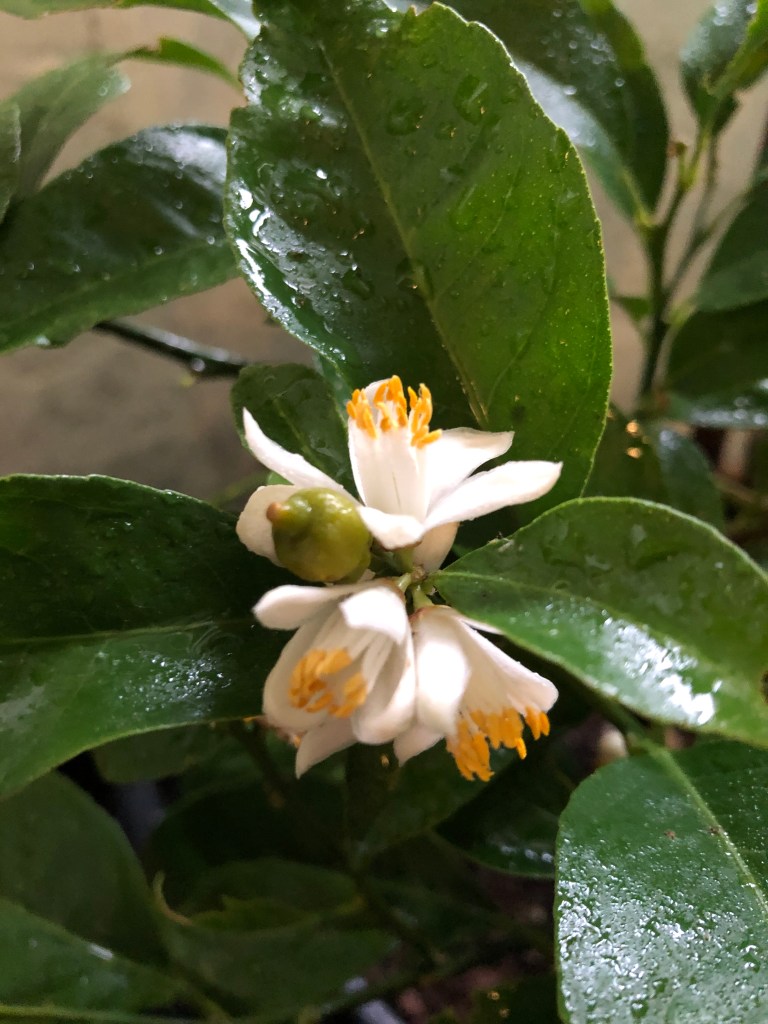
I have accumulated quite a few interesting Citrus varieties over the years. In that time I have learned a lot about what they like and dislike in the area that I live in here in the UK. My citrus plants are of all different hardiness, but this year I have brought them all inside to over winter and they are doing very well.
Winter is the ripening time for citrus fruits. They can take up to 12 months to form and ripen. In fact trees can have both flowers and fruit at the same time, depending on the variety. They form the fruits in the spring and then the fruit develops over summer and then in the winter if you’ve got fruit on your tree that is when it ripens. The growth period is later on, it starts at about Easter time and continues into early summer. That growth period is when the stems and new leaves form and grow.
As I mentioned, I have brought my citrus inside for the Winter. I have left them outside in the past but it’s just been too cold for them and as a result they haven’t done well at all. They would put on very good leaf and stem growth but they would never fruit. They just didn’t get enough warm time to recover after the winter. So I have found that the best thing for me to do is over winter them inside. What most people do is bring them inside the house or a Conservatory and then all of a sudden things start going wrong. The leaves start falling off the trees, or they go yellow and your poor citrus looks awful.
I am very lucky to have a part of the house that seems to be perfect for my citrus trees. They are thriving, it is the basement. It doesn’t get heated much so stays quite cool. Citrus like to be at a temperature of about 10 degrees to 15 degrees in the winter. 5c would be the absolute minimum. So if you have got them in the house with the heating on full blast or have under floor heating or open fires, your citrus will no doubt suffer.
The other thing that’s really important is they like to be in a cool humid atmosphere. Central heating or fires or under floor heating dries the atmosphere out way too much. There are 2 ways to try to combat this. Place the pot on a tray with pebbles and then fill the tray with water which will evaporate into the air and give you a bit of humidity (just remember to keep filling the tray up), or the way I do it is to mist the plant twice a day with rainwater. NOT tap water. The only problem with misting is you need to make sure that the leaves are really, really wet. I have put my pots on black plastic so when I mist them I let the leaves drip dry. You could try putting your trees in an unheated greenhouse. Just watch the temperatures and if they drop below 5c then you will need to cover the trees with fleece. A frost proof shed might also work. The only thing you need to remember is they need light.
Problem solving
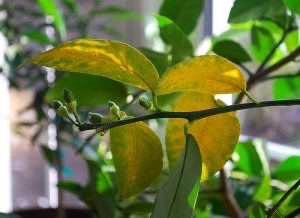
Yellowing Leaves – Citrus can suffer from chlorosis because they don’t like lime. You need to water them with rain water. Tap water has too much lime in it. Please be careful not to overwater as this can also turn the leaves yellow. Check how damp the soil is by sticking your fingers into the soil. They shouldn’t come out soggy. Citrus need to be kept nearly dry over winter. If you over water then the roots could rot.
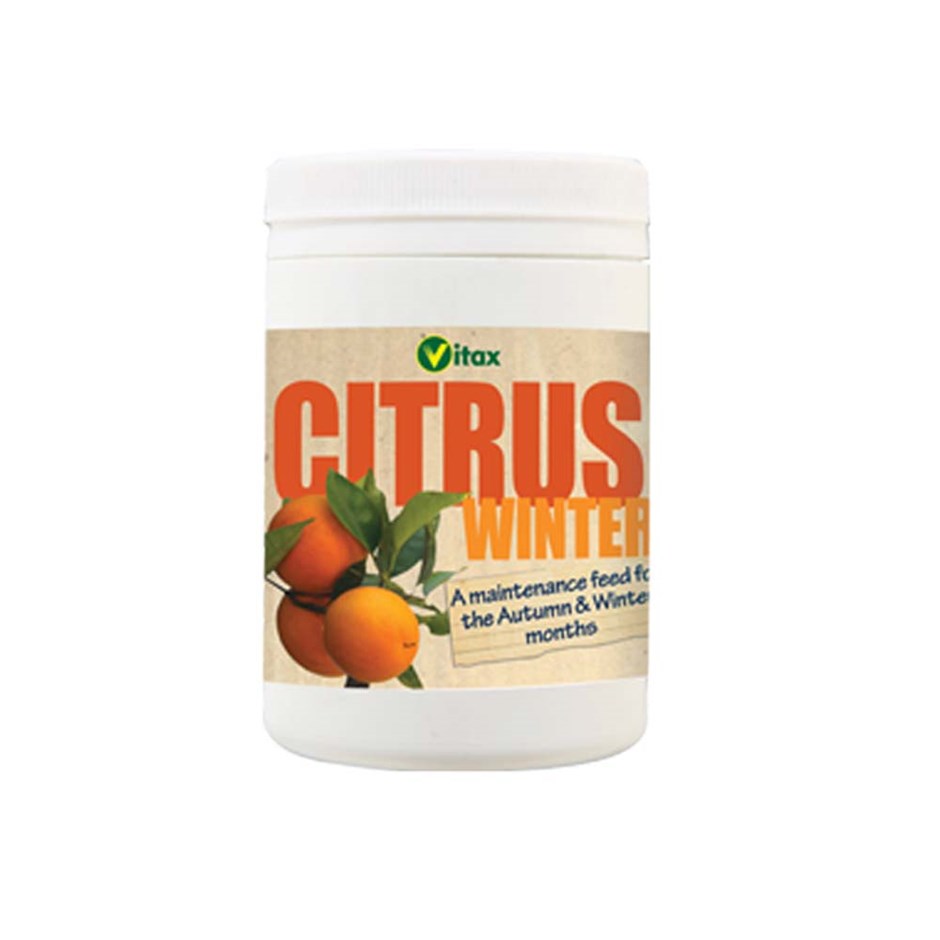
Another reason the leaves might be turning yellow is because it needs a feed. Citrus are heavy feeders. Use a winter feed such as the one below.
If the leaves turned yellow just after you brought you tree inside then it could be a temperature issue. Don’t worry because if you keep the temperature stable then it should sort itself out.
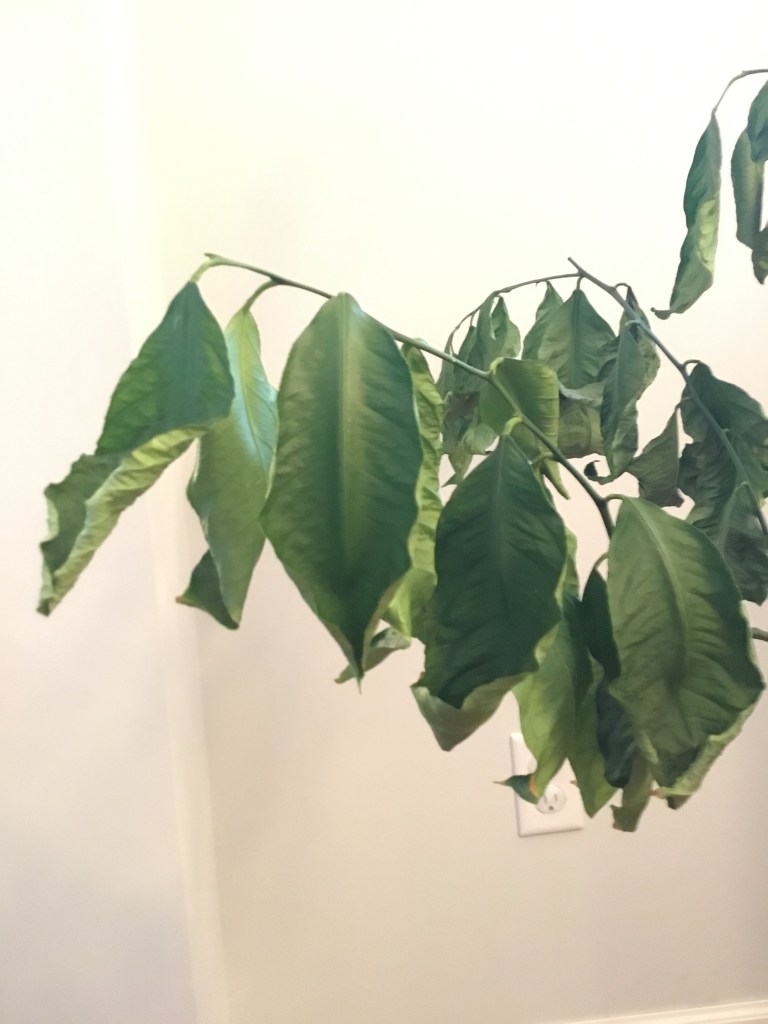
Dry leaves falling off – This usually happens because the tree is under watered. However, over watering and then under watering could also be the cause. Citrus trees are not deciduous so the leaves shouldn’t fall off. Exposure to cold drafts or cold temperatures can sometimes cause this to happen as well but don’t worry because you should get new growth in the spring.
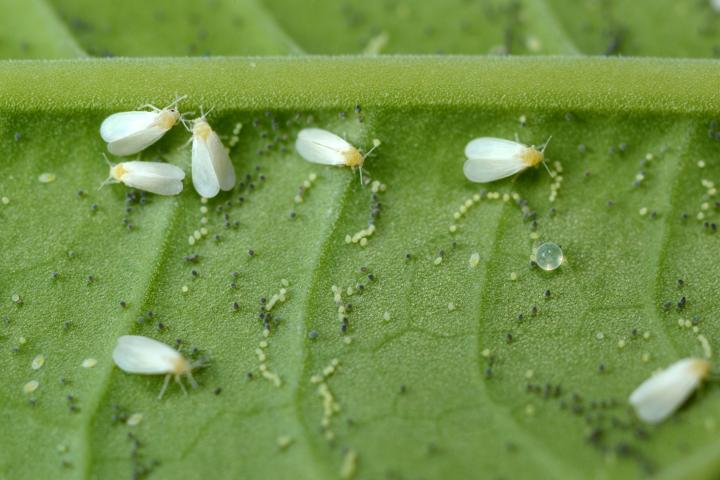
Greenfly and Whitefly – These are both sap suckers. White flies also excrete a sweet sticky substance called honeydew which brings on other problems such as sooty mould. They are not able to survive the winter outside so they are usually on plants that are indoors. They love warm humid conditions, so the first thing to do is reduce the room temperature.
The best way to rid your citrus of these bugs is use Neem oil. All pests hate Neem and I don’t blame them because the stuff stinks. However it is completely organic and extremely effective on whitefly and greenfly and it is a fungicide as well. Melt 5ml of neem oil and add it to 1 litre of warm water. Use in a spray bottle whenever you see the little blighters.

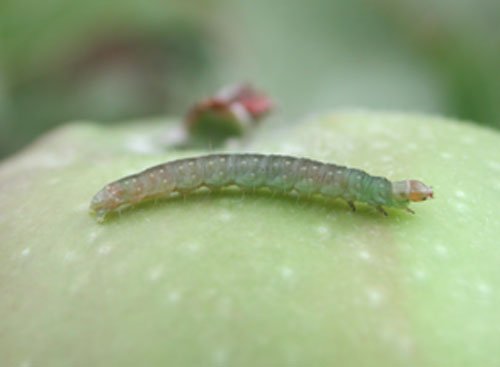
Green Caterpillars – These are called Tortrix Moth Caterpillars. They are small green caterpillars that love eating citrus leaves and flowers. They bind the leaves together with silky threads and the larvae feed inside this cocoon and damage the leaves. I just pick them off and dispose of them but they don’t like neem as well so there is another use for it.
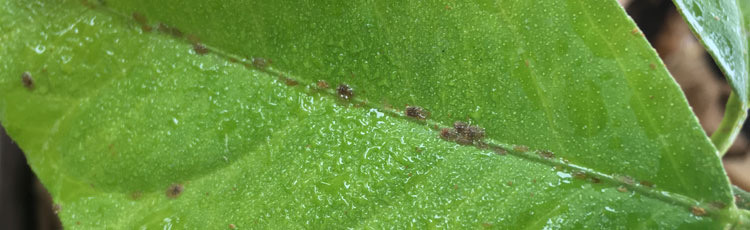
Scale Insect – Citrus scale pests are sap suckers as well. They also produce honeydew which can become black soot. The scale that seems to attack my citrus have a suit of armour on them, these are the females. They stick to a stem or leaf and never move again, sucking the life out of your plant. If you don’t have many you can rub them off the leaves but if you have a big infestation you can dab a cotton wool ball in methylated spirits diluted with water and washing up liquid and wipe them off with that. They should die instantly. Be careful how much methylated spirit you use. Try a few leaves first you don’t want to burn the leaves. You could also try dabbing a cotton wool ball in Neem.
The Varieties of Citrus that I have
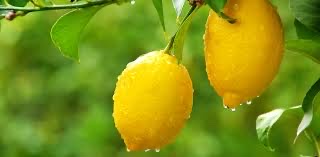
Eureka Lemon – My tree does tolerate quite low temperatures. 5c is ok. It has lovely dark green leaves and conical lemons with quite a thick skin. It seems to flower several times a year. Very common Lemon in the UK.
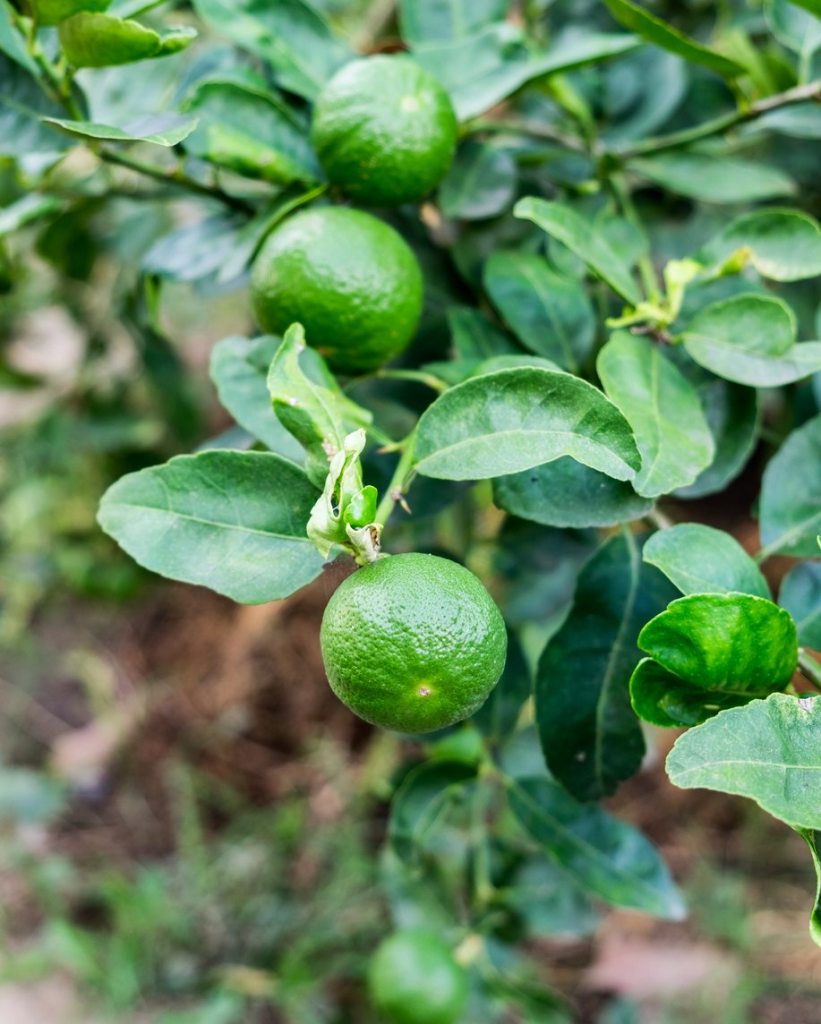
Lime Tree – My lime tree will tolerate 5c but it is doing so much better since I have brought it inside for the winter. It is full of beautifully scented white flowers and they are setting as fruit. I make sure it is fed regularly.
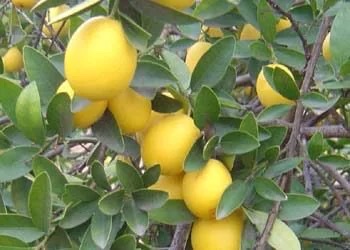
Limequat – a cross between the Key Lime and the Kumquat. This is a cold hardy tree. I haven’t tried to keep it outside over winter because I only got it this year but I might try next winter. It is native to Florida where it is used to make limequat pie. It is quite a small tree usually reaching no more than 4ft. Can’t wait for fruit from this one.
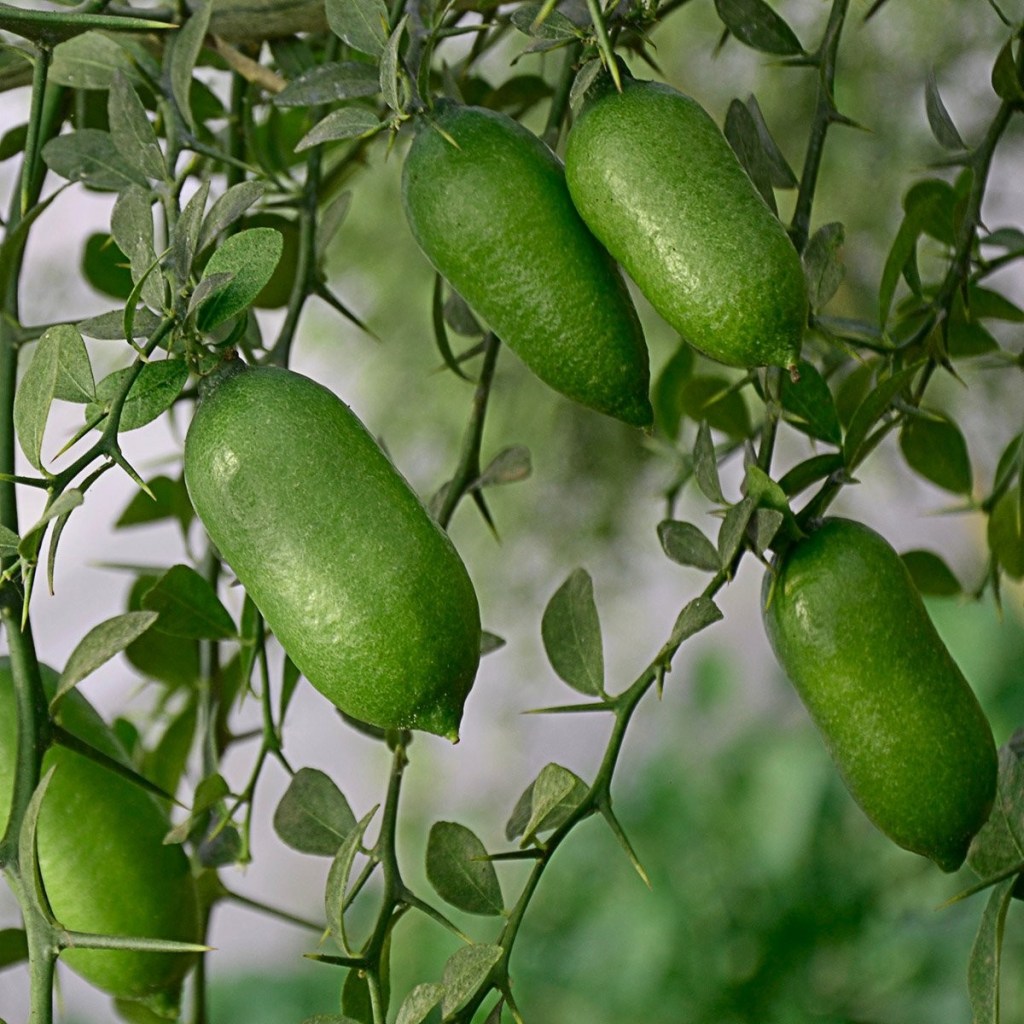
Finger Lime – also known as Caviar Lime. The fruits are filled with little pearls of lime that pop in the mouth. The tree has tiny leaves and very sharp spikes and these can be grown outside in the UK. I had mine outside all winter last year. I only brought it in this year because it has fruit on it and I don’t want to lose them.
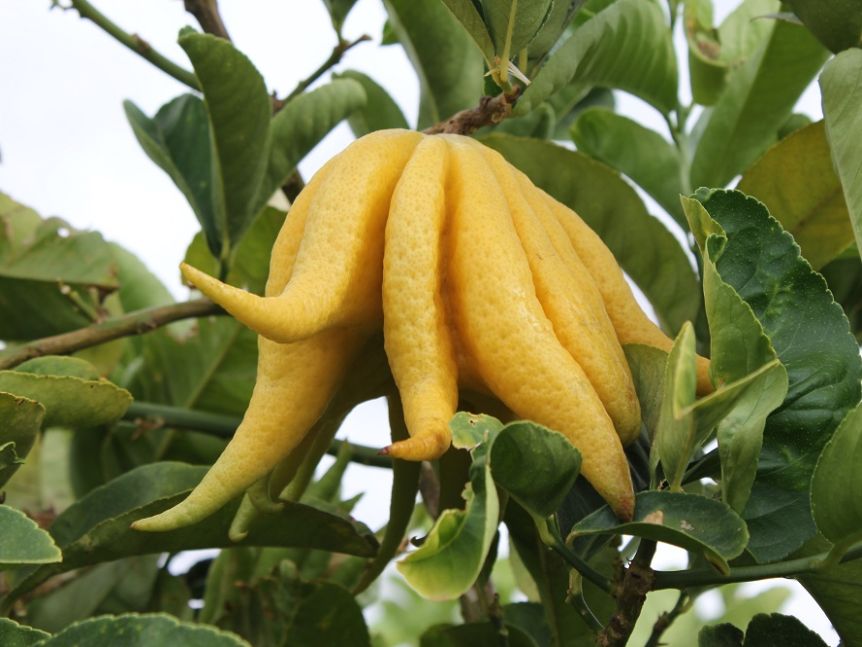
Buddhas Hands – I’m really looking forward to the fruit on this tree. They are spectacular looking and have an amazing aroma. They get their name from the fact that they originated in India and then travelled to China with Buddhist Monks. They are still popular in religious ceremonies. A symbol of good luck and happiness. This citrus is sensitive to cold so I will keep it at 10c and above.
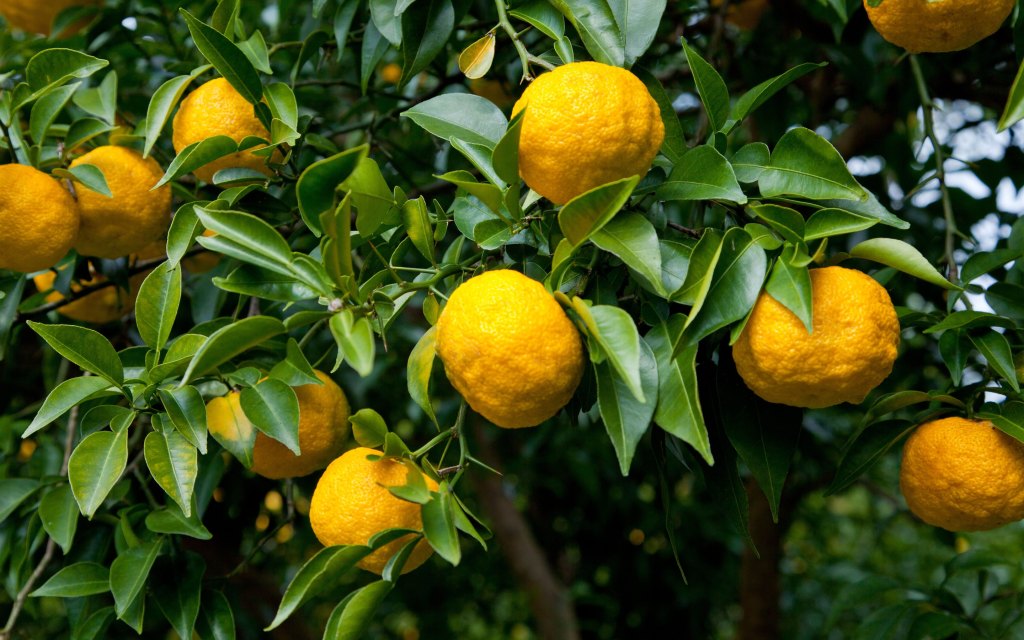
Yuzu tree – Grafted onto Yuzu rootstock. Grafting Yuzu on Yuzu makes the tree better suited to low temperatures. The Yuzu tree is a hybridisation of a sour mandarin and the lemon-like Ichang Papaeda. The juice combines grapefruit and mandarin flavours. It is used to flavour ponzus, soy sauces, miso and chefs everywhere are using it.
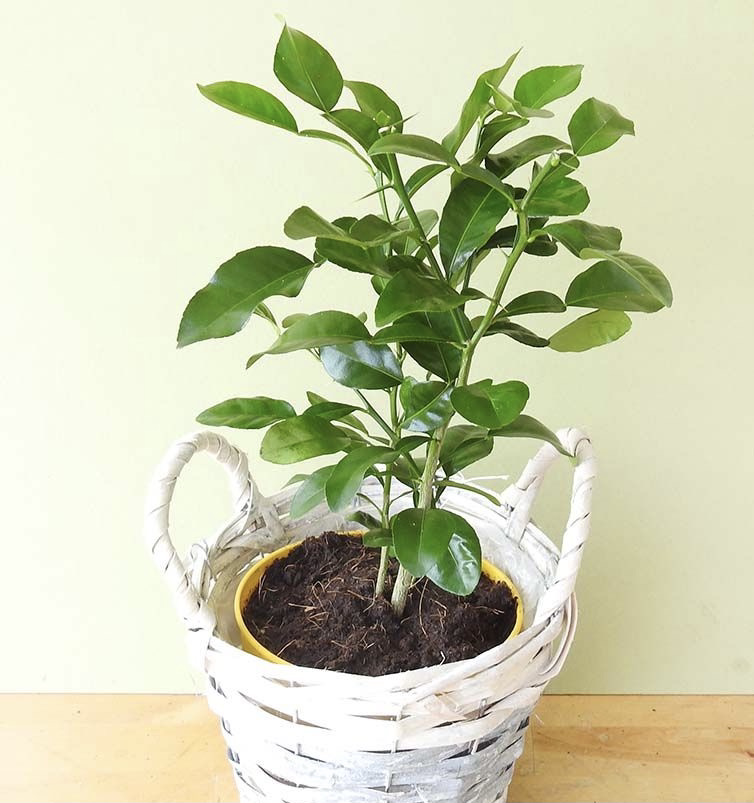
Kaffir Lime – shiny double leaves which have a fantastic lemony aroma. Used mainly for Thai cooking. Not cold hardy at all so you will have to keep it indoors for most of the year.
You can grow citrus in the UK, and very successfully. Why not give it a go?????


Leave a comment